

DSOs & Multi-Site Groups

Dental IT services for groups that keep adding locations.

We standardize every office, monitor them centrally, connect them securely, and bring new locations on board quickly. Based in Buffalo, supporting dental groups with offices anywhere in the country.

  • 300+ locations supported across the U.S.
  • One standard at every site
  • Central monitoring & reporting

Built for Groups

One way of running IT, at every location.

Whether you have five offices or fifty, every site runs on the same standard, reports to the same monitoring, and gets supported the same way.

01

Standard Builds at Every Site

Same hardware, settings, and security everywhere.

02

Central Monitoring

One view of every server, firewall, and backup.

03

Site-to-Site Networking

Secure links between offices and headquarters.

04

Fast Onboarding of New Offices

A repeatable plan for every acquisition or de novo.

Security & Compliance

One security standard, no weak locations.

A group is only as secure as its least-protected office. Attackers don't care which location they get into first, and if offices are connected, one compromised front desk computer can become a problem for the whole group.

Compliance, documented in one place

HIPAA risk analysis, business associate agreements, training records, and incident response plans, kept consistent for every location. When an auditor, insurer, or prospective buyer asks, the answer doesn't depend on which office manager picks up the phone.

See our dental cybersecurity controls
Same baseline, every site Applied across every location we support
Control Office 1 Office 2 Office 3 Office 4 HQ
Multi-factor authenticationEmail, remote access, and every system with patient data
Endpoint protection & patchingEvery workstation and server, reporting to one console
Firewalls from one templateRemote access closed to the internet
Protected offsite backupsCan't be deleted from the office network, with test restores
One account processLeavers lose access everywhere the same day
Security awareness trainingFor staff at every location
The Problem

Every office set up differently is every office a special case.

Most dental groups grow by acquisition, and each practice arrives with its own IT history: a different server, a different firewall, a local IT person who set things up their own way, and backups that may or may not work. Within a few years the group is running a dozen different setups, and every support call starts with “how is this one configured?”

That costs more than it looks. Problems take longer to fix, security is only as strong as the weakest office, and nobody at head office can say for sure which locations are backed up or patched.

Buffalo IT Services supports more than 300 locations across the United States, and the approach below is how we keep a large estate manageable.

Dentist and dental assistant treating a patient in a dental practice

Standard Builds

One standard, applied everywhere.

We agree on a standard with your leadership team and apply it to every location.

Group IT Standard Agreed with your leadership team
Every location
  1. 01

    Hardware

    Approved server, workstation, firewall, switch, and access point models, so spares are interchangeable and staff moving between offices find the same equipment.

  2. 02

    Workstation builds

    The same Windows version, security settings, practice and imaging software versions, and printer setup at every site.

  3. 03

    Network design

    The same layout of practice, imaging, phone, and guest networks, with the same naming and addressing scheme.

  4. 04

    Security baseline

    Endpoint protection, multi-factor authentication, patching schedules, and admin access handled the same way everywhere.

  5. 05

    Documentation

    One format for every office, so any technician can pick up any location.

Easier budgeting

When every office runs the same equipment, you can plan replacements across the group instead of reacting to failures one office at a time.

Day-to-day support

Each office follows our dental IT support model, including the practice software your offices run.

Buffalo IT Services engineer monitoring client systems across dual displays and a laptop
Monitoring

Central monitoring and reporting for leadership.

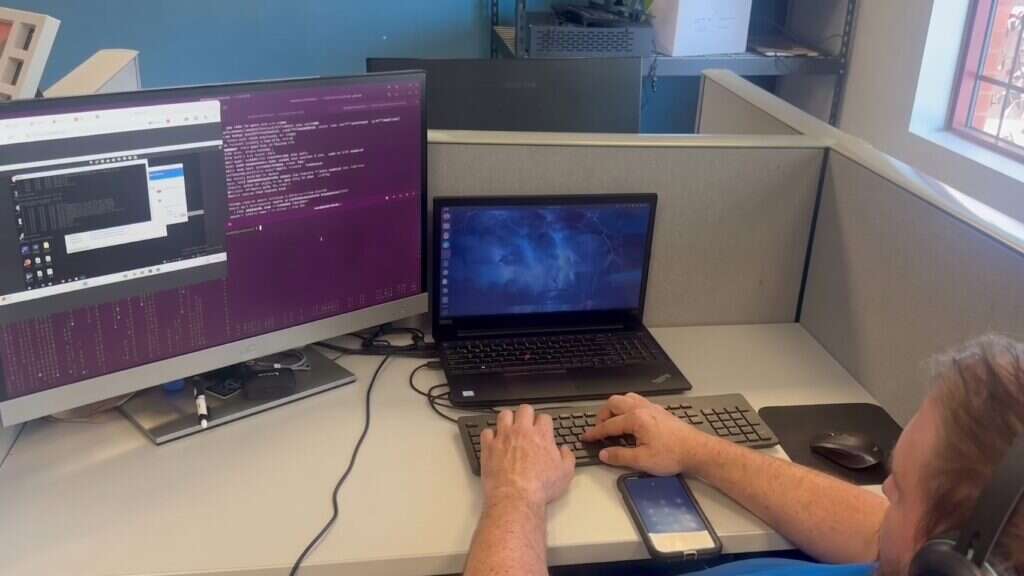
Every server, firewall, workstation and backup job reports into our central monitoring. When a server’s disk is filling up in one office or a backup has failed in another, we see it and act on it, usually before the office notices.

For leadership, we report on what matters across the group: which locations are fully patched, which backups have been test-restored, which hardware is due for replacement, and which security issues are open. That gives operations and compliance staff a straight answer when an auditor, insurer or acquirer asks.

Office managers get something useful too: one number to call and one ticketing system for every location, so a problem at a satellite office is logged, tracked and fixed the same way as one at the main practice. Recurring issues across several offices show up in the data, which tells us where a standard needs changing rather than fixing the same thing site by site.

Networking

Site-to-site networking that stays up.

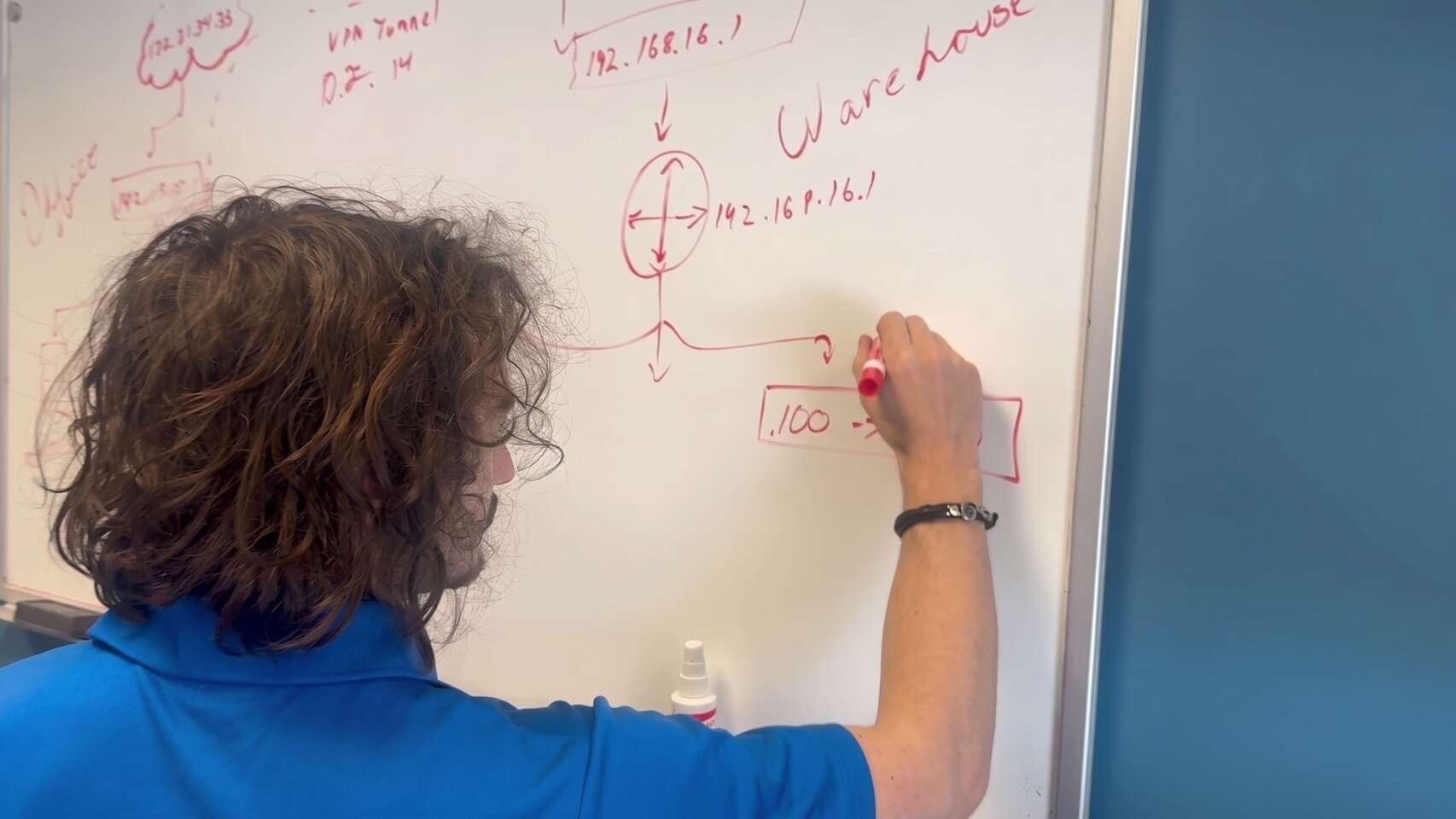
We connect locations with encrypted site-to-site links between firewalls. Just as important, we design for the opposite: offices that shouldn't reach each other, don't.
Buffalo IT Services engineer mapping a multi-site network and VPN tunnel on a whiteboard

Connect

Offices that need to reach each other

Central billing in every office's software Shared imaging archive Phones that transfer between sites Centralized practice database

Where an office depends on that link to see patients, we add a second internet connection so one provider outage doesn't close the office.

Isolate

Offices that shouldn't, unless there's a reason

Limiting traffic between sites means a problem in one location stays in that location, instead of spreading across the group.

Links monitored and patched through network management

Onboarding

Onboarding a new location, the same way every time.

Whether it's an acquisition or a new build, each new office goes through the same five-step plan.

  1. 01 Ideally before close

    Discovery

    We document the existing IT, check backups and security, and flag anything urgent.

  2. 02

    Stabilize

    Fix urgent risks first: working backups, multi-factor authentication, remote access closed to the internet.

  3. 03

    Plan the move to standard

    What can stay, what needs replacing, and when, worked around the office's schedule.

  4. 04

    Cut over

    New firewall, network, workstations and, where needed, a dental server migration, done after hours.

  5. Hand over

    The office joins central monitoring, documentation, and normal support.

Common Questions

Multi-location dental IT FAQ.

Quick answers to what DSOs and dental groups ask us most about coverage, onboarding, and reporting.

Talk about your group

Tell us where your offices are and how you're growing. We'll walk you through how we'd support them.

(716) 463-5111

Yes. We support locations across the United States, with remote support from our Buffalo office and onsite work arranged as needed. Call us to talk about where your offices are.

No, though it helps. We support mixed groups and can plan a gradual move to one system if that's your goal.

Urgent risks such as backups and remote access are addressed first. The full move to your standard is then planned around the office's schedule and hardware lead times.

Yes. Many groups keep an internal IT lead and use us for monitoring, after-hours coverage, projects, and onsite work. See our co-managed IT page.

Patch and backup status per location, test restore results, hardware due for replacement, and open security issues, in a format that works for operations and compliance.

Ready to see what we can do for your business?

Schedule a free remote or on-site IT consult. Tell us about your business and the services you need – response times are typically under three hours.