
Dental practice cybersecurity for offices in Buffalo and Rochester: protection against ransomware, phishing and account takeover, built around how a dental office actually works. We put the controls in place, keep them running, and give you the documentation HIPAA expects.
Stop the phishing email and the stolen password.
Every workstation and server watched and updated.
An offsite copy kept apart from the office network.
Short, regular and specific to dental offices.
Before talking about tools, it helps to know where you stand. If you cannot answer “yes” to every question below with confidence, that is where to start:
Most practices we meet can answer yes to some of these and are unsure about the rest. That is normal, and it is fixable. A security review with us walks through each question for your office and gives you a prioritized list of what to fix first.
Does every staff email account require multi-factor authentication?
Is remote access to the office closed to the internet, except through a secure tool with multi-factor authentication?
Do you have a backup copy that someone on your network could not delete, even with an admin password?
Has anyone restored the practice database from backup in the last three months, and did it work?
Are all computers, including imaging PCs, on a supported version of Windows that still gets security updates?
Are Windows updates being installed, and could you prove it?
Does every computer run security software that someone is actually watching?
Does every person have their own login, with access removed the day they leave?
Has your team had security awareness training this year?
Is your HIPAA risk analysis current, and does it reflect the systems you use now?
A dental practice is an attractive target for the same reasons it is a busy business: it holds patient records with names, dates of birth, insurance details and sometimes Social Security numbers; it cannot see patients without its schedule and charts; and it usually has no full-time IT staff watching for trouble. That combination makes practices likely to pay to get running again.
Most attacks we see start the same few ways: a staff member opens a convincing email and enters a password on a fake login page, a remote access tool is left open to the internet with a weak password, or an unpatched computer is exploited. Once inside, attackers look for the server and the backups, then encrypt everything at once, often overnight or on a weekend.
We wrote about this in 7 essential ransomware protection tips for dental offices. This page covers what we actually put in place.
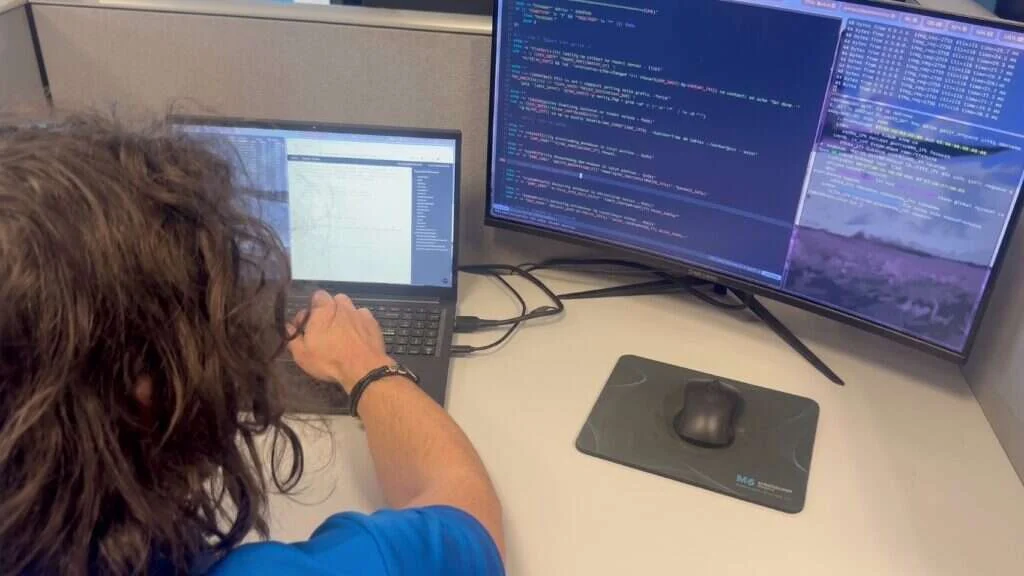
Email is where most attacks start, so it is where we start too.
That catches phishing, malicious attachments and look-alike domains before they reach the front desk.
So criminals cannot easily send email that looks like it came from your practice.
On email, remote access, the practice software where it supports it, and any cloud portal that holds patient data. A stolen password alone is no longer enough to get in.
For sending patient information to specialists, labs and insurers.
So the account staff use every day cannot install software or change security settings.
Multi-factor authentication matters for insurance too: many cyber insurance policies now ask whether it is in place before they will cover a practice.

Every computer in the office, including the imaging PC in the corner that nobody logs in to, is a way in. We cover them all:
On every workstation and server, watched centrally so an alert on a Saturday night does not wait until Monday.
For Windows, browsers and common applications, with imaging and practice software updates handled carefully so they do not break clinical work.
With no remote desktop open to the internet and vendor access only through secure, logged tools.
On laptops and any computer that leaves the building.
Like old versions of Windows that no longer get security fixes, on a plan rather than in a panic.
Our general cybersecurity services page explains the layered approach we use across all clients.
Ransomware groups go after backups first, because a practice with a clean backup does not need to pay. A USB drive plugged into the server, or a backup folder on the same network, will usually be encrypted along with everything else.
Backups we set up for dental practices include an offsite copy that cannot be changed or deleted from the office network for a set period, alerts when a job fails, and regular test restores of the practice database and images. Our healthcare data backups page covers the details.
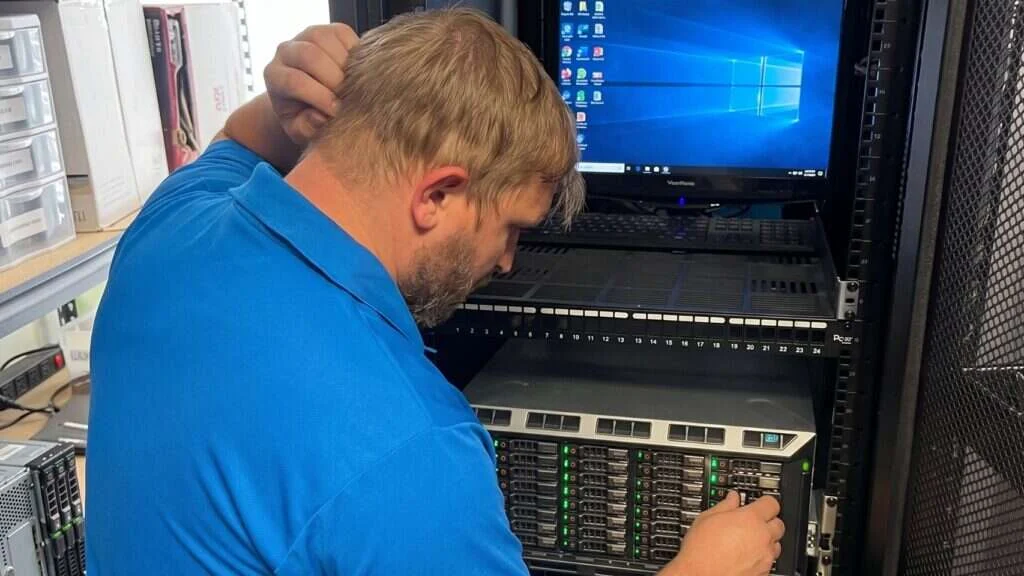
Technology catches most attacks; people catch the rest. We run short, regular security awareness training for your team, built around what dental staff actually see: fake insurance emails, “updated payment details” from a supplier, a caller claiming to be from your software vendor. Simulated phishing emails show who might need a refresher, without turning it into a blame exercise.
The HIPAA Security Rule requires practices to protect electronic patient information with administrative, physical and technical safeguards, to carry out a risk analysis, and to train their workforce. Everything on this page maps to those requirements. What HIPAA also expects is evidence, so we keep records of what is in place, when it was reviewed and when staff were trained.
If you have not had a risk assessment recently, our HIPAA audit for dental practices is the place to start, and it is part of our wider dental IT support.
No. Antivirus is one layer. Practices also need email filtering, multi-factor authentication, patching, a locked-down firewall, backups kept away from the office network, and trained staff.
Unplug the affected computers from the network, do not turn them off or delete anything, and call us at (716) 463-5111. Do not contact the attackers or pay before speaking to IT and your insurer.
The current HIPAA Security Rule requires reasonable safeguards based on your risk analysis rather than naming specific tools. Multi-factor authentication is one of the most effective safeguards available, and many cyber insurers now require it.
HIPAA requires security awareness training for your workforce. We recommend short sessions through the year rather than one long annual session, plus simulated phishing tests.
Yes. We can handle security alongside another provider or internal staff. See our co-managed IT page for how that works.
Schedule a free remote or on-site IT consult. Tell us about your business and the services you need – response times are typically under three hours.